
2026 Dissertation Fellowship Recipients
Farzaneh Ebrahimzadeh Holasu
 Farzaneh Ebrahimzadeh Holasu is a Ph.D. candidate in Film Studies at Michigan State University, with specializations in Digital Humanities and Women and Gender Studies. Her scholarship focuses on feminist film and media historiography, archival studies, global cinema, and media preservation, with a particular emphasis on recovering overlooked histories of women in Iranian cinema. Through interdisciplinary and multilingual research, she examines how women’s creative labor and cultural contributions have been erased, fragmented, or marginalized within traditional film histories.
Her dissertation, Feminist Homecoming: Archival Turns in Historiography of Iranian Cinema, rethinks Iranian film history from the silent era through 1979 by centering women’s participation as performers, editors, writers, dubbing artists, designers, and cultural workers. Challenging male-centered auteur narratives, Holasu uses archival fragments, oral histories, film magazines, censorship records, and visual ephemera to reconstruct women’s roles in shaping Iranian media culture. Her work reframes archival absence and fragmentation not as limitations, but as meaningful evidence that reveals the structural silencing of women’s histories.
A key component of her dissertation is the digitization and open-access publication of Tamasha, a Persian-language film magazine from the 1970s, in collaboration with the Media History Digital Library. Holasu is overseeing bilingual OCR corrections, metadata refinement, and archival organization to transform the magazine into a publicly accessible digital archive for scholars, educators, and the Iranian diaspora. Her project also incorporates videographic essays that combine audiovisual analysis with restored archival materials to create an innovative, multimodal approach to feminist film scholarship.
Holasu’s work has been published in JCMS: Journal of Cinema and Media Studies, Screen, Film Quarterly, and Synoptique. She also serves in leadership and editorial roles within the Society for Cinema and Media Studies and Screen Journal.
The Phi Kappa Phi Dissertation Fellowship will provide critical support as Holasu completes her dissertation and expands the public reach of her research. The award funding will allow her to dedicate more time to writing and revising chapters while supporting archival research trips to major collections at NYU, Columbia University, Harvard University, UCLA, Stanford University, and the New York Public Library. The fellowship will also help fund the completion of the Tamasha digital archive and the production of videographic essays that preserve and amplify women’s histories in Iranian cinema for future scholars and broader public audiences.
Taewoo Kang
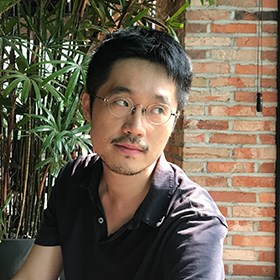 Taewoo Kang is a doctoral student in the Information and Media program in the College of Communication Arts and Sciences at Michigan State University. His research focuses on digital platformization, political communication, and the democratic implications of emerging artificial intelligence systems. He is particularly interested in how Large Language Models (LLMs) can shape public discourse and potentially strengthen deliberative democracy.
Kang’s dissertation, A Model Citizen: Large Language Models as a Cross-Cutting Coordinator, examines whether AI-generated political news can encourage more constructive communication across political differences. His work addresses a central challenge in democratic life: while respectful and thoughtful public discourse is essential, polarized and emotionally charged communication often drives greater participation online. Rather than attempting to eliminate disagreement, Kang investigates whether AI systems can help citizens engage more openly and productively with opposing viewpoints.
The project centers on the concept of intersubjectivity, or how individuals understand perspectives different from their own. Through a large-scale online experiment, Kang studies how different forms of AI-generated news influence civic engagement, openness to disagreement, willingness to participate in cross-cutting dialogue, and the quality of interpersonal communication. Some news treatments reinforce existing viewpoints, while others contextualize disagreement or highlight shared understanding across political divides.
Methodologically, Kang introduces a new framework called Algorithmic Cue-Embedding (ACE), which simulates how digital platforms personalize and distribute political information. By embedding different communicative rules into AI-generated news systems, ACE allows researchers to study how algorithmic design choices shape democratic attitudes and behaviors in a controlled and transparent environment. T
The Phi Kappa Phi Dissertation Fellowship will provide critical support for completing the dissertation and advancing its broader impact. Because the project depends on resource-intensive AI technologies and online experimentation, the award funding will help cover access to advanced LLMs, cloud-based computing infrastructure, and data-processing tools necessary for generating personalized political news treatments. The fellowship will also support participant recruitment for large-scale online experiments and travel to interdisciplinary conferences in communication, political science, AI ethics, and computational social science. Through these opportunities, Kang aims to strengthen the empirical and policy relevance of his research while contributing to conversations about how AI systems can support healthier democratic communication and civic engagement.